How to Defend Everything
- Who ever is in control is the person who exists between the other person's knees and armpits
- Like kicking out of cradle or bringing your hands up to defend choke and exposing inside position while you do
Guards is a parasite because it makes you comfortable on your back
If the passer doesn’t control your bottom leg, you can just get up

Subconscious Priorities
Superior Side Control
The only side control escape you need to know is to get your hands to your groin
https://youtu.be/qX30Wx5glJg?t=1475
The rule for joint locks:
Right-handedness matters, especially in positions like half-guard
https://youtu.be/qX30Wx5glJg?t=2715
Attributes: Athlete, Fighter, Martial Artist. All exist in world champions
From a podcast: also try to avoid using strength in competition. It's not just for training. Being smooth and not using strength until the right moment keeps you relaxed and effective

-
"As long as I keep my hips facing the floor - my groin facing the ground - I am very difficult to sweep"
-
Whoever's hips are highest is on top. (This is useful both when sweeping and when being swept)
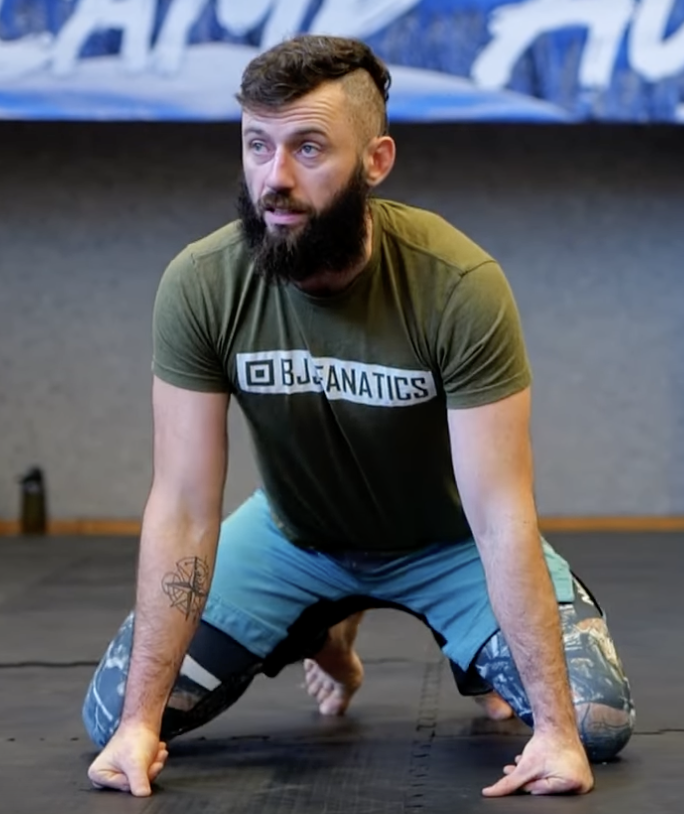 Timestamp 13:48 clip it
2023-09-21 Notes - 2nd Session with Chris
Good skiiers are not always balanced, they're always unbalanced and making micro adjustments to remain balanced.
Balance is an athletic skill, not a technical skill. It's conditioned and you can lose it.
The idea of a pyramid base with 2 feet instead of 3 roots, the concept of edges and corners still applies. You can't push someone over a corner, only an edge.
Attackers delete space, defenders make space For training with bigger guys. Mess with their balance, mess with their posture. Don't let them past your knees, don't let them control their hips. Mess with their spine.
In wrestling you can't just grab someone by the head, you havve to go head and arm. -someone else (due to the ruleset) - Sven The only thing you should ever be looking for is getting behind somone's shoulder - Sven Get his shoulder behind your shoulder arm drag, russion tie. Assume they're stronger, so don't move them, move yourself If someone's front arm opens that's the shoulder you get behind. Just push the arm out of the way. As soon as its open, its weak. Every bit of hand fighting is a timing thing. Keep your front arm down, short hand fight, don't drop your head or it'll get stnapped down. Keep your discipline, keep your posture. Slide step instead of walking and crossing over your feet. Keep hunting for the back of their elbow. Get your belly button on them (so you're not leaning forward and have connection rather than eyes up. This keeps your posture good.)
As soon as i get past their shoulder i get my belly button on them and just drive them down.
For standing, don't bend over, keep your back up and your front arm down (close the front door)
Don't open your front arm until it has to be fired for an attack
After I get behind their shoulder and connect, my ability to get up and behind them is based on my bottom leg being free!
You can weave your bottom leg through your top leg so that you can get your hips facing the ground, this makes it easier to get your bottom leg free so you can get up and get behind them.
Focus on rotating your hips as fast as possible If they start pullling their arm out and rotating back into you, you need to get your rotation in and fast
When defending, as soon as you feel the opportunity to create space (moving yoru hips and shoulders), do it. (Violently start moving them). If they can't stop your movement your out, if they're trying to stop it, they can't submit them.
3 planes of motion: Rotate on the axis, extend and contract, laterally move shoulders and hips Perfect back control has to address all of these.
Nexst time someone is on my back, go left or right, move your shoulders or move your hips laterally, and contract or extend. If you start moving yhour shoulders they'll hold your shoulders tighter and loosen on your hips and vice versa. Just get you back off their chest.
Create space all of the time and they will have a much harder time submitting you.
Key points
- [[Balance]] is the trunk of the "Tree of Jiu Jitsu", therefore
- If you maintain balance, you vastly limit your opponent's options
- If you compromise the opponent's balance, you give yourself options
- You could focus on nothing else but balance and be great at Jiu Jitsu
- "As long as I keep my hips facing the floor - my groin facing the ground - I am very difficult to sweep"
- Whoever's hips are highest is on top or will inevitably become the one of top.
- In order to get up you must have a free bottom leg
- This applies to taking the back / getting behind your opponent and getting up when playing guard
- Alignment is the brother of balance, is it what allows you to maintain balance ^3226a9
- Imagine triangle on the ground made by lines connecting the points of your body in contact with the ground. This is your [[base]].
- Your base can only be compromised by pushing you over an edge, not a corner, of that shape.
- Your base can only be compromised by pushing you over an edge, not a corner, of that shape.
- This principle applies even when you're standing. The shape is just a line between your feed, but if you fall, it will be because you were pushed or pulled over the edge, the line between your feet, and not over a corner (the feet themselves)
- Therefore, when standing, remain with the line facing your opponent, or else you are weak and can be easily toppled.
- This is why we shift, instead of step, when moving in a combat stance. We do not let our feet cross each other.
- When both combatants are standing, to take them down your only objective is to get behind their shoulder and connect.
- Think of keeping your belly button connected to them (this ensures good posture)
10-28-2023 - notes meeting with Chris
Arm drag: lock the arm in place and walk around it
Flanking
Takedowns: The only thing I'm looking for is to get around the back of your shoulder. In Referee position, if they're on the side of you and you can move your leg behind theirs then you're behind their shoulder and you're winning. It's like what makes one position in Dog Fight superior. Arm drags work from Referee too.
Can I keep the door closed and get behind you. If both players are down on the mat, whoever is "winning" is whoever is behind the hips of the other person. Same principle of getting behind the shoulder.
Practice this on less skilled opponents so you can work it. "It's not a reflection on me if a lower belt beats me" It's an important thing to humble yourself or else you deny yourself training in the areas in which you are weak.
This is how keenan learns, try new things against worse people.
On "Just getting up" from darces and arm triangles (darce turn in, arm triangle ball up and turn away and invert) Turtle to tripod side bottom - get under them, stand If someone is going for a darce by pulling my arm I can just get up You can hold me down while pulling me up. Arm bars and darces, you need them on the floor See latest youtube video and instagram If they try to pull you up, just get up and they'll have to switch to keep you down Arm Triangle: if they're on the side: Hold the back of your knee with the back of your wrist to prevent your shoulder Then turn away Because I'm on my side digging my toes into the floor they can't pull me down again Roll away and pull my bottom leg underneath me. I'm not sweeping them, I'm moving myself. The roll away almost looks like a gramby, you're curling up and inverting Mounted Arm Triangle: Go the other way, bridge over shoulder, get your arm to the ground and go baby bridge
The direction in which you can stand up is also dictated by which arm is free because you need to post on the ground In a darce it's the bottom arm so you must turn into them to stand In an arm triangle it's the far arm so you must turn away to standNote
North south Kimura
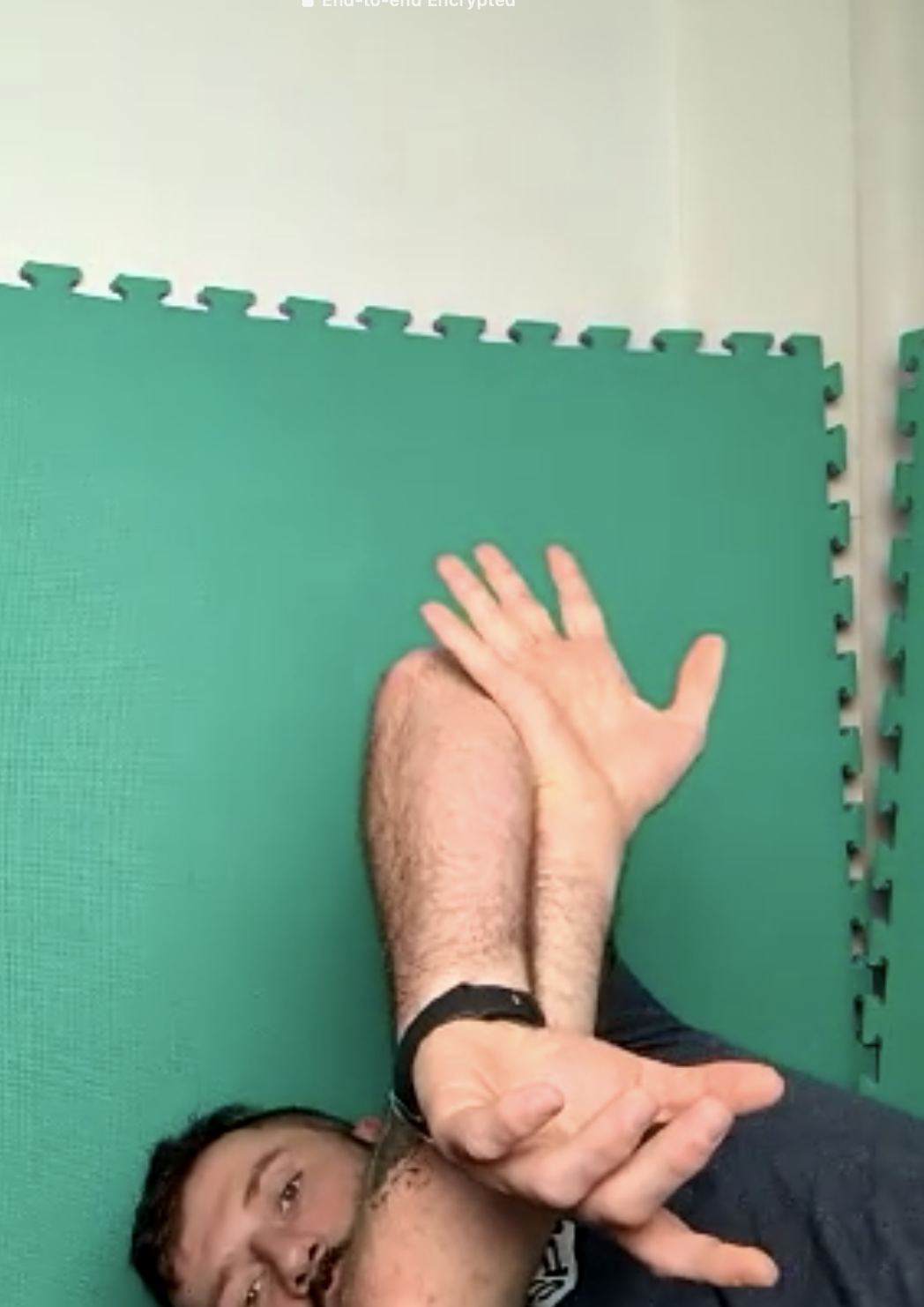 This pops them off your elbow, then go underneath and get elbow down.
This is just pushing their forearm off
This pops them off your elbow, then go underneath and get elbow down.
This is just pushing their forearm off
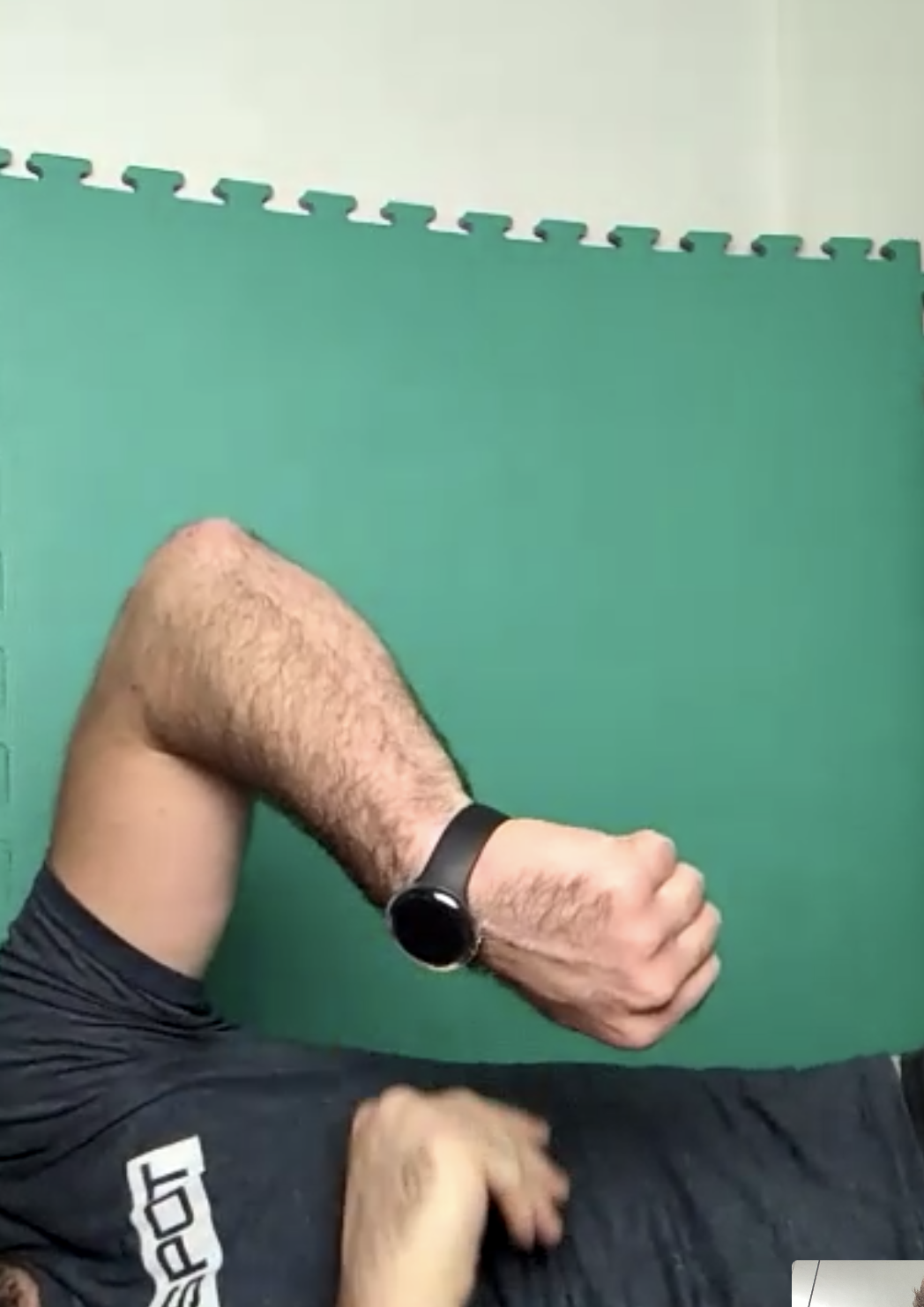 Northsouth Kimura survival, just keep shrimping in circles because then they don't have your body.
Escaping the "Control Joint" is always better than escaping the "Submission Joint" Which affects the "Breakable Joint"
It's hard to move up from the core, it's easy to move away form the core when trying to control Heel Hook to Toe hold Kimura to Wrist lock if you lose the control joint
Inside heel hook, knee bar and outside heel hook all require that I control your hip. eliete level leg lockers have a crushing grip on your hip The control joint is the most important to control. The control joint dictates if you'll be successful
Free the hip vs control the hip IS the leglock shootout If I ask you to break a stick you have to control both sides of it.
12/28/2023 Notes Meeting with Chris
Combat base is the same as the standing down block when kneeling. It does the same thing and protects the same spots.
Standing passing is the same as guard passing. In guard passing you can go through, over, under or around the knees. In standing you can go through, over, under or around the hands and elbows.
When standing, if you're going to attach to someone, attach with your belly button or else you're breaking your own posture to take them down.
"The best way of learning takedowns is doing mat returns from non-standing" -Pritt or Danaher or someone
3 phases of takedowns:
- Good posture
- Hand fight to get to the core
- execute the takedown Practicing mat returns alone allows you to train#3and refine the end stage where you're already attached to them.
Whoever is sitting behind the other's hip will get the takedown.
Samurai position instead of referee when getting up from running man because it protects your inside position and keeps your head far from their access so you can't get choked. When you're getting up and they're behind you, if you're holding on to one of their hands, then there's a hole for you to get out (remember 3d control)
Referee is only good if they're in front of you, use samurai if they're behind you and half of each if they're on the side.
important These are the layers of defense:
- Good Posture
- Close the door (e.g. protect your inside position)
- Hold the hand that would go through the door ("kill them on the lawn") Don't even let them through the door.
Offense goes in the opposite of these steps. This applies to standing and ground.
osoto gari gets you past the elbow on the inside.
- Record footage of myself rolling
There has to be a posture break before you can do a successful attack. Must keep posture and alignment, keep a straight back. Anytime someone gets you they broke your posture first Just before I got stuck in anything, my neck rounds. Try it offensively and defensively. Keep mine, break theirs. With a broken posture they find it very hard to attack and feel very vulnerable at the same time. If someone is above your kneecap they can twist your knee. In terms of getting pushed over, there has to be a line between your feet pointing at them, not that the legs themselves have to point, but the line between them. Posture and alignment are the same thing... It's just a game of power. Alignment is required to generate power. Power is posture + strength + connection to the floor (direction of generating power)
RNC starting with arm bent is like cutting paper with scissors without opening them. If you start arm triangle with a bent arm it's like trying to snip paper with closed scissor. The point is: establish good connection with the most potential leverage first.
If you tie someone's shoulder to their ears you can take mount as slow as you want - Gordon Ryan
Darce: If you elbow them in the armpit you can kimura them and turn out. If you can make your shoulders and posture wide enough they shouldn't be able to connect their arms.
TODO
Spend an entire round where I'm just focusing on keeping my posture like I have a book balancing on my head. Aware that my spine has to be aligned. Keep my shoulders back and down like I'm rowing. If my head gets pulled down, elevate my hips but don't allow my spine to bend. Do one round liek this where I don't care if I win or lose, just focus on the posture. Pretend it's your first day, you don't know any techniques you're only focusing on posture that way your mind isn't split. The reason I'm not being disciplined with posture is that I'm thinking about too much.
Everything I do, don't think about the tecniques in general, think about how I should break their posture. Attack their posture relentlessly. What do you do as the person on top... Posture break - relentlessly.
It's only through lack of discipline that you lose your posture. It's always the most disciplined people that will succeed. Don't get emotional and desparate and sacrifice discipline.
TODO: watch the videos back and message when the posture goes wrong.
In terms of escaping referee. Think of control as 3D and 2D. if they wrap all the way around you they have 3d control, if they are only on either side of you they have 2D control and there's a direction you can escape. In Ashi garami, if the knee isn't pinching to the foot there's a "hole" you can escape out of. Same goes for when they don't have 3D control, just move in the direction that their not preventing you from moving.
- Combat base is essentially the same as standing down block
- Standing passing is the same as guard passing: through, over, under, around
- If you're going to attach to someone, attach with your belly button or else you're breaking your own posture to take them down
- The best way of learning takedowns is doing mat returns
- Three phases of takedown:
- Good posture
- hand fight to get to the core
- execute the takedown
- To learn takedowns do it from the ground. Just #3, mat return relentlessly
- Whoever is sitting behind the other's hip gets the takedown.
- If you're holding onto their wrist, then they don't have 3D control and there's a way for you to get out
- You can hold onto someone's hand so they can't hold onto you
Protecting Inside Position
- Phase 0: Maintain Posture
- Phase 1: Close the door (inside position: arm pits to hips, neck to shoulder)
- Phase 2: Hold the hand that would go in the door ("Kill them on the lawn")
2024-01-28
Handfighting: Their 3d control only works if they beat you on the handfight. Under, over, around, and through (for elbows and knees). Postmortem the handfights with someone
- Martial Arts and Philosophy book
- State of no mind
- you can postmortem but not narrate in the moment if you are of no mind
- when postmorteming you're explaining the ideas to yourself
- stop them and go "What happened there?"
- Chris: "You're only capable of doing the no mind things because you fully understand" Standing hand fighting is like open guard, same objectives. Feet fighting, hand fighting. What is success in a hand fight? Getting past the hands and elbows to get access to the spine? How? Under, over, around and through.
- State of no mind
If you can't get underneath someone's elbows, don't double leg. Get a takedown associated with each (U, O, A, T).
Chris's whole gym has great wrestling but does no explicit takedown training. Because they handfight and get to the spine and spend time there.
Work on handfighting consciously and read what they are doing and what options they are giving me.
Training with people who are less skilled gives you great opportunity to learn because they give you one problem to solve at a time, whereas peers or better opponents will shut you down before you can learn. Train what you don't know with those who are less good so you can experiment and progress.
The "blue belt curse" is what you have to break to get to purple belt. Don't be afraid of loss to lower belts, you have to experiment to improve. Be willing to experiment and lose to white belts. Play the stuff that you suck at on bad players and postmortem it and that's how you improve with techniques you're not good at. "Get over yourself". Identify the small failures. It's a snowball that builds to a moment, to a takedown, to a submission. There are so many moments, so many small failures.
Just get underneath their arms and you'll find double and single legs. Get your belly button on them and push them over, tie the knees together. Try faking the side step (what you're good at) and going into a double leg.
If you handfight their elbow on the standup, they're never going to flank you.
Attack the periphery to access the spine, once you control the spine, then you can submit the periphery - souders or danaher
What is handfighting, it's getting past the elbows, that's the objective. Over Under Around and Through.
All the grips that you do with your legs / feet have a sibling position with your hand grips. Closed guard is just double unders, half guard is just a single leg. There's always a handfight, even in a doubleleg, you're getting under the elbows, the handfight was invisible.
3/2/24
Thai clinch works because you own the centerline Address collar tie with "over under around or through"
The 4 distances
- Too far to do anything
- hand fighting distance (as soon as you can grab their hands)
- "over under around or through" the elbows
- control of the spine (glue your bellybutton to their body)
Think of the belly button as a reference in all "distance 4" scenarios (double leg for example). Fixing belly button placement will fix head placement.
If you're locked up in a mutual collar tie, fight for centerline "centerline control"
You can break their posture by twisting it or bending it
The overemphasis of one (O, U, A, T), leads to another.
Responding to the leg weave. if I already lost, they got past my knees, then I need to go defensive
You don't push something that's pushing against you. You don't push a static object. If is impossible for top side person to move with out taking their weight off. Like to go to mount, they have to take their leg off the ground and for that brief moment, the leg is weightless. He'll blindfold them and do the old wing shun kung fo drill. If you're too tense to block the punch they get hit, but if they relax and feels it, they'll block every time. So think of this in side control, if I'm framing and tense I wont feel it coming, but if i relax I will. IF YOURE TENSE YOU WONT FEEL THEIR INTENTIONS. YOU MUST BE RELAXED TO READ THEM. You can do this blindfolded, it helps with escapes.
Darce escapes: Grab the wrist and keep the shoulder down. As soon as they relax their grip in any way, elbow them in the armpit and follow them out the back door. Never go elbow deep when attacking with an anaconda because they can americaana you just by grabbing the arm and turning. Put a lot of pressure in their shoulders: darce -> kimura, anaconda -> americana arm in guillotine: put your shoulder on their sternum and keep them flat on their back guillotines only work when the attacker is flat on their side
All 3 of these arm triangles are only available because they got access to my armpit. Those chokes aren't accessible from "positions", they're accessible from "arms being opoen"
elbows in, shoulderblades back (for posture). Reach just as far as your shoulderblade will let you.
When you reach (like from half guard), reach with a back palm (pronated) to keep your shoulder stronger (like Chris Novasky showed for retaining overhook). It keeps them from flattening you out. When you feel this, it'll blow your mind. Reach back palm and there's no collapsing. This applies to defending darces too.
Homework:
- Belly button reference
- 4 distances when it comes to elbow protection
- game: jump to defense as soon as they get past your kness. This should be a trigger.
- The kung fo exercise. Play with moving when they do. You can't move forwards without taking weight off of one leg. Just wait for them to move and then sweep them and knock them over. Don't try to sweep a static person.
When you have a collar tie, use a "U" grip instead of a "C" grip. The difference is the wrist bending and being a part of the grip. If gives you more directions to apply force. "C" grip can only go down and acrsoss, "U" grip: down, across, and back into a guillotine. If they're doing a collar tie on me, come underneath and flick the U grip. You've gained access to the spine, maximize it. You got access to the spine, bellybutton on and shoulderblades back; maximize it.
Shoudlers back and down, like yoga cobra. Old school wrestlers keep their shoulders back, they can't reach cause they've got their shoulders short.
3/23/24
"If I can weaponize gravity it makes it harder for you to attack me" (standing up while someone has your back) double trouble, stacking the hips I'm not getting experience with people doing my strategy of just standing up. This is why it's best to practice in a gym-wide kind of way.
My stance is unusual, right handers usually wrestle right hand forward. So you can use your hips to pull. Stronger attacks on your arms (for pulling) will be on the front side Down block until you need it. Which side your present forward dictates what options your opponent has
I might not be shooting cause I usually stand with left leg forwards. I approach guard and knee cut right light forwards but in standup I do left leg forwards.
This is top 3 important things to understand about my own personal jiu jitsu. Understanding how your body works left and right. How it changes from side to side. (The other 2 are learning defensive postures and standing up.). "One hand holds the paper, one hand holds the pen". One is used for control, and one is used for attack. Things I haven't been able to pull off, it may just be because I'm on the wrong side. It's amazing how much a difference this makes. Even something as simple as running man. My weak side vs their strong side. Or vice versa, you can use this to your advantage.
5 year plan
Blue belts often develop an "A" game, become good at it and stick to it because they don't want to lose to white belts. So naturally when you take on new things, you'll try it, fail, and go back to your "A" game. Your ego says "don't lose, you're a blue belt". You can't let your ego get to you.
Don't be afraid to try new things. Balance my time between "doing the right thing" but once you're happy with it, don't let your ego keep you from trying new things.
Blue is the buffet belt.
Bonsai tree: Being upright, keeping your balance, having good hand fighting. That'll take the longest time.
Trunk: Balance, Posture, Handfighting
Defining characteristic if someone is good: if they can't take you down, can't beat you at hand-fighting.
What's the defining characteristic of my progress? Learning more techniques or becoming an unstoppable machine.
Spend your time at the thickest part of the tree.
Are there diminishing returns to focusing too much on the trunk of the tree?
Chris: nope!
Pearl analogy: Starts as a grain of sand, filtering and added calcification (layers and layers) turn it into a pearl. Once you find a grain of sand, if you keep going at it and exploring it, you'll learn everything around it. Eventually you'll grow outwards.
White Belt: Defense and true fundamental movement Blue Belt: The buffet belt, the ability to explore everything The progress of a blue belt is that they're willing to experiment. You need to sample everything so you're never lost. Be curious around that grain of sand and it will grow. Purple Belt: Now you've tried everything, you're trying to sharpen the blades. There is no weird places or positions for a purple belt. They're not good at everything but they never get lost. Shaving off all that excess motion. Brown Belt: Is a blackbelt without a legacy. A dangerous person. Chris teaches them by giving them access to things that further their career. Now change your mindset to look at depth of coaching, understanding, explanation.
Chris Hauter: Swimming analogy You throw a _ into the deep end of a pool:
- White belt: Drowns
- Blue Belt: Paddles until they get into a part of the pool they can't understand and they drown
- Purple Belt: Can swim.
Chris as a black belt: There's nothing else to chase (belts). The belts will come, the skill will come. If you just show up. Not having to chase a belt made me happier, now I'm just curious. I want to understand how to help people better. It's just depth. Always getting deeper and deeper.
Remember the scissors analogy, when choking the open arm should touch the neck first.
2024-04-29 - Safety and Longevity
The environment of the school dictates safety. Young fellas are gunna gun for you.
The first injury everyone gets in JJ is rib injury. Jogging is better for your than swimming because the stress on your bones strengthens them. Same with weightlifting. But no one can work their ribs. Bones and ligaments need to be under stress to stay strong. As you get older your physical fitness will look after you but if you roll with crazy people they will hurt you and you can't avoid it.
Staying on top and controlling will also protect you (Chris's way), it looks after both you and them, especially against spazzes. You can throw submissions at them but then the round restarts but if you pin them, then they can't hurt you. It's lower belts that will hurt you (generally higher belts have the humility to look after you) "I'm mean to beginners, I control them fully" to save myself and them. Control will stop powerful, unskilled people from doing dumb shit to you.
If you keep that mentality, I could do this forever. Pin them, control them.
Main people that cause you injury - Powerful, unskilled people - Skilled people with an ego
"The thing that broke me the most was being young" You need to get your skills up while you're young and can take the beatings. That takes violence. But at the same time, being the violent 20yr old is what broke my body.
"When I was younger, I always had something to prove. When I got my blackbelt I just stopped caring, I've got nothing else to prove."
"I started TRT last year and all those pains disappeared, physically I'm back to 20 again." "If you're trying to prove yourself, you're going to get hurt, you're going to get battered." "The tapout era, the no-fear, die on the mats mentality - that's what broke us."
- Renato Paquet, red belt, find the footage of him rolling with young blackbelts.
- Look for the InTheory video on how to flow roll
- Of all the things you can do, this is the one that looks after you the most
- Chess drill: "roll to kill each other", but your only allowed to do one move at a time
- You can't stop the other person from their move (like breaking a grip)
- gentleman's agreement on how much "one move" would be
- This makes it almost impossible to get a submission
- Gets boring after 5 minutes
- Second drill: Monkey Drill. Same as chess drill - one move at a time - but you have to do the exact wrong thing. If it looks like Jiu Jitsu, like it makes sense, you did it wrong. You have to choose the weirdest craziest shit you can think of.
- It looks like twister
- as you do one for one the weirdest stuff, you'll end of landing in real positions that you'd never think of getting there normally.
- People are obsessed with doing the "right thing" and so they're tense but monkey drill teaches you there's a billion ways of getting to great outcomes.
- Third drill: Flow Drill. Same feeling of Monkey, allow your body to move with 0 resistance, do the same thing but make it look more like Jiu Jitsu, if someone pushes you, you allow it to happen. Keep that constant contact.
- "With those 3 drills, I have broken the most stubborn mother fuckers. After these 3 drills they can now flow roll."
- This is from Christian Growgart
- If you can flow, this is the route to train Jiu Jitsu forever.
- This is why drunk people survive car crashes better.
On the belt system. "I don't like it". I give belts only so they can compete or to show that I appreciate their skill growth. I gave 4 people blues this week, 12 years (missed some years), 6 years, 5 years consistent, 3.5 years consistent. White belt denotes a student while color belts denotes level of instructorship Jiu Jitsu is power-based. We fight in divisions where power is controlled so we can measure skill. Jockeys have to weigh in for horse racing so you can measure the horse because the jockeys weight the same Variables are age, size and gender. But in the gym, it's an absolute division. Belts create hierarchy in the gym.
CAUTION: Never go for a guillotine from standing. This is a technique that is known historically to snap people's necks and leave them crippled. head outside single leg is banned at whitebelt jiu jitsu level. In wrestling you can't grab people by the head and you don't jump onto your back. So head outside singles can exist but in jiujitsu people will grab hold of the neck and jump backwards.
- Look up the footage.
- Broulio
https://www.reddit.com/r/bjj/comments/3dorul/brazilian_jiu_jitsu_competitor_has_neck_broken/
Same with jumping guard, blows people's knees out.
June 2nd Richmond VA especially this one PJ Lucy June 3rd Baltimore DC June 4th Chantilly VA
Jiu Jitsu is the best vehicle for seeing the world, you have friends everywhere.
- Look up "The Gentle Art of Travel", this is why Chris does Jiu Jitsu
2024-07-31
On getting up from referee and framing one of their arms out (3D control)
Go two steps one way and then when they chase go one step in the other and you'll out rotate them. Stiff arm them out, circle away from them and let them chase and then change direction.
Think of a bicycle wheel, the gears turn 15 cm and the outer wheel will turn 90cm. Understand circles. All scrambles are circles. If there's a circle, then there's a center and a rim. "Am I on the outside or the inside?"
There's also the arm pass around the back. You can do it from standing or on the ground. Spin on a pin. Quickest way of turning and it makes them chase.
If you're on the outside, get them to change the circumference of the circle. Footwork must be tight.
On tapping them to exhaustion
Chris makes people tap to exhaustion. Not pressure. He's focusing on ignoring everything that isn't the hips. Fasten to the hips and drag them into the floor. Sit on his legs and hips. "Going for submissions is kinda bad for you and makes you 'rob the gasstation' / 'hail mary' a lot".
Grab the hip bone itself. And cup the leg and start dragging the hips. Even single legs. Priit lies on your kidneys (with his collar bone) and puts all his pressure through there when he single legs. When you do that they'll go down every time. The discipline to only attack the hips. It's like driving with the hand brake on, they might get where they want to be but it'll be slower and exhaust them.
If I'm on top, put the hips in a box (instead of holding them down with pressure). If you're putting downward pressure on hips they can slide out. Instead pinch around them with wedges. Put the hips in a box. and pinch. Instead of holding the pressure down. Their hips have to operate in a box I control. I'm not even necessarily using weight to hold them down, just maintaining the box. Because pressuring onto them makes ME vulnerable to tip over when they slide or pivot out. You need to be connected to the floor.
To make them tap to exhaustion:
- Box in the hips
4 steps to pass anyones guard:
- Maintain my own balance, connection to the ground, posture
- (while in someone's guard) attach to their hips and drown their hips. this works for ANY guard
- Once I've boxed in the hips, don't try to pass but just get ahead of the knee caps
- Once I'm around the knees, put the hips in the box; bring your legs in to do the job your arms are doing to box in the hips and now your arms are free since they've been relieved by the legs. Now the arms can attack the upper body (fold them and twist their spine) When I've got their hips and collapse their spine, it's claustrophobic and they panic their way out and exhaust themselves and I just reapply the steps.
On folding people
The way to fold someone is to put your hands on the floor (behind head and knee) and, like a real anaconda snake, wait for them to move, take up the space and stick them there. You don't have to squeeze at all, just take up the space they give you. Create the box. use the friction of the ground to put a bar behind their head and every time they move to escape take up space. "People will always break their posture to escape" I'm not purposely folding them, I'm letting them break their own posture and I don't let them get it back, step by step.
You can break their posture in either direction, extension or flexion. Constant posture breaks exhausts them.
Tournament advice
If I'm racing someone who is serious (full energy) and I make a mistake they'll catch it, so don't race them outright. You have to slash the tires, rev out their engine and burn their fuel. Sabatoge their car and then winning is easy. Burn them out on the handfight, then takedowns are easier. Your first attempt is less likely to succeed compared to your 20th attempt when they aren't as sharp.
Don't try to win against a fresh opponent, make them wear down. Make them frustrated. Then your moves will work.
"I can maybe submit you now, but I'll take you further into hell" - this mindset will make your submission rate go through the roof. Don't attack someone when they are strong and fresh and focused. Attack someone who is desperate, broken, tired, and not running on all cylinders.
Defending back takes from referee
"Any time you get your back taken, it means you got flanked (flanked your elbow)". If they're flanking your elbow it means the circle problem exists. You're sitting ever so slightly too narrow. Sit deeper and see if people are taking your back as much. If you pull your shoulder back a little bit (change your shape, narrow to wide) they'll have a hard time taking your back. Widen your flank and you'll be able to directly reengage on your stand up. Get up facing them.
In referee, if someone is directly behind me, that's bad. Try to use Kindle to stand back up instead of rolling to turtle from running back.
Mentally go back a step and see where it could be fixed earlier. Pull your head down to your feet, put your butt in between me and them and get back into kindle (reverse shrimp). Better chance of standing up into forward facing frame.
Any time you get taken down, don't turn away, get your "guns" facing them and stand up to kindle.
2024-09-08
CJI: Controlling the hip over everything else Use the hipbone itself for grips. Relentlessness to the hips. "As soon as I connect to your legs and your hips, I can't retreat because it allows you to get your legs back and I get attacked" Be relentless, keep pushing forwards. Add this to the grip mentality and the "put them in the box" mentality. When you connect to the hips, have that forward momentum, keep it going. You can move forwards faster than they can move backwards.
Balance is so long as your center of gravity is within your shadow 
Keep your balance and hold onto their hips relentlessly. Pinch weight into the hips using legs and shoulders. If they're bigger, don't get desperate and don't get disheartened. Don't rob the gas station. You need to cook the energy out of them.
When rolling with huge / super strong guys: Keep my weight on the hips through my legs (3/4 mount, power ride). Pinch my knees on the hips and handfight from this position to bring his shoulders above his ears.
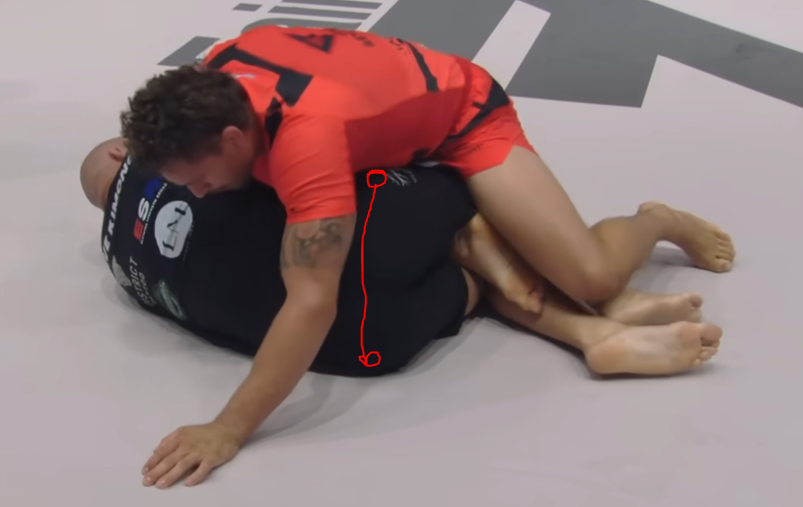 He's sitting on the legs
"Once you set up weight on the hips, do not remove weight from the hips. This is your military base, don't leave the walls."
He's sitting on the legs
"Once you set up weight on the hips, do not remove weight from the hips. This is your military base, don't leave the walls."
Watch this whole video just noticing when weight is in the hips:
"Decapitate from the hips/ from the pelvis"
Conventional mount has your weight on their belly. Sit on their hips instead. On the tops of their thighs their hip bones When boxing in their hips, its not the belly it's the hip bones. Bone grips (Turkish oil wrestling)
- Try taking a bone grip on the hips.
- Get footage
on getting Darce'd:
On duck unders: use your belly button as the reference point when you're coming in, put your belly button on them. When you make connection with the spine, don't make connection with the shoulders, get your belly button on them. If you do this your head and shoulders will be away from attacks.