If you get submitted... … it is due to one of the following:
- Bad Habits (giving up inside position, not maintaining center of gravity, etc.)
- Lack of knowledge of what is good change and what is bad change (traversal along the funnel)
- Lack of knowledge of what to do (how to escape, how to survive)
- Lack of anticipation (experience)
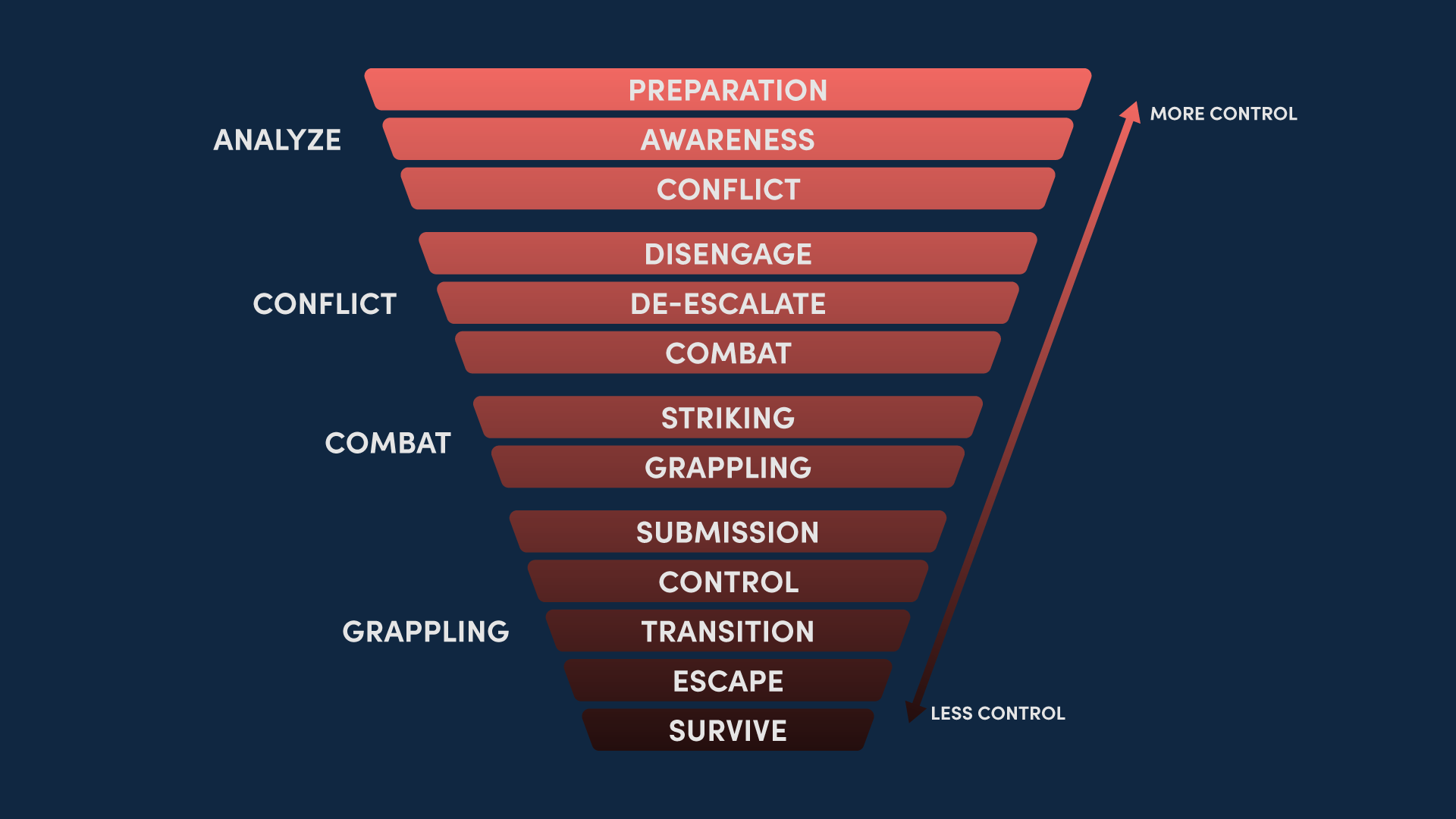
Funnel of Control
The Funnel of Control is the process of conflict. The higher up the funnel you are, the more control and options you have. The lower down the funnel your opponent is, the less control and options they have.
The higher up the funnel you start, the easier it is to make changes that will induce a desirable outcome.
Jiu Jitsu Rainbow
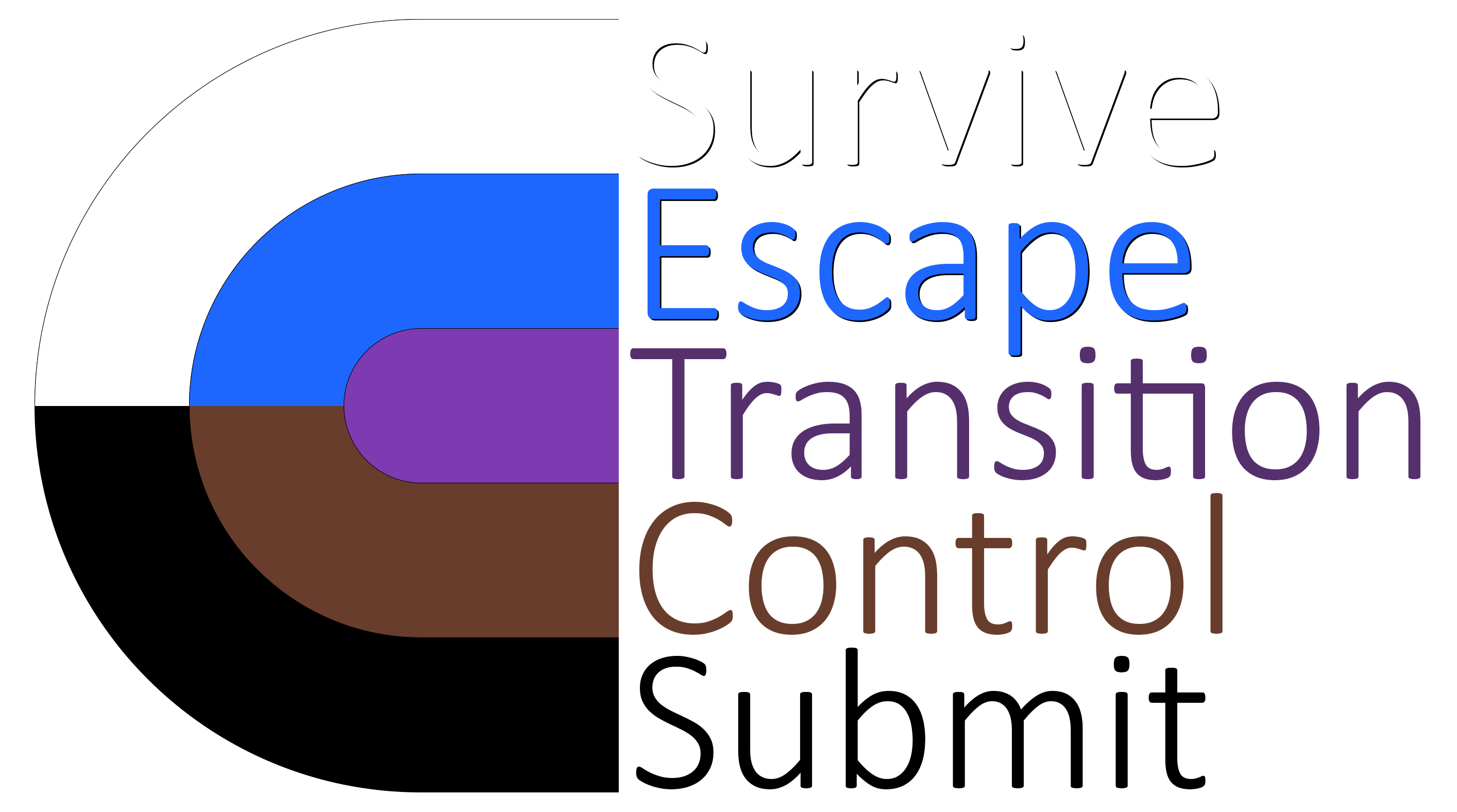
The Jiu Jitsu Rainbow both demonstrates which core competency of Jiu Jitsu should be mastered at each best and suggests how each element corresponds to it's opposite. To successfully Survive, you are preventing Submission, to successfully Escape you must subvert Control. The bottom half of the rainbow involves dominant positions, the top half involves undesirable positions and "Transition" is the bridge to travel from one to the other.
The Bonsai Tree
^the-bonsai-tree
 (This section is inspired by the philosophy of Chris Paines)
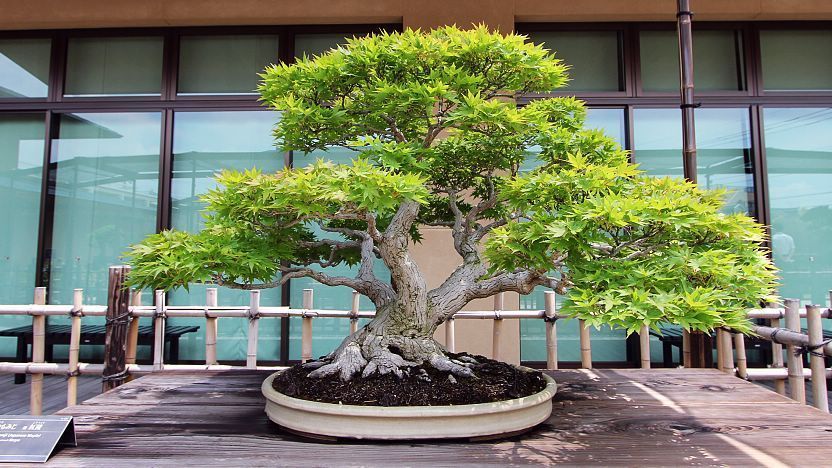
Jiu Jitsu (and combatives for that matter) are like a Bonsai Tree:
(This section is inspired by the philosophy of Chris Paines)
Jiu Jitsu (and combatives for that matter) are like a Bonsai Tree:
- Each leaf is a technique
- Each smaller branch is a category of techniques
- The larger branches are positions
- ...and the trunk is Balance, Posture and Alignment
If you cut off a branch (for example, Side Control) then all of the leaves on that branch die. There is no application of a position's techniques until you arrive in (or someone puts you in) that position. If you cut the tree at its trunk, then ALL of the leaves die. This is critical. If someone cannot break your balance, posture and alignment then they cannot get you to the ground and none of their techniques apply. All submissions, sweeps, transitions, takedowns rely on breaking one or more of those three.
There are invisible "habits" and behaviors that are an innate part of a good combatant. To name a few: judging the distance, keeping balance, posture and alignment, quick recovery after being swept, knowing what's coming, swift and purposeful movement etc. These behaviors are trained differently than individual techniques are trained. For many, they develop automatically as a matter of course. Simply watch a blackbelt move (