The Primary Concept
A dominant stance consists of:
- Inside Head Position (and good, strong posture)
- An Underhook
- Inside Thigh Position If you are ever in a situation where you don't know what to do, fight to establish these three (but not necessarily all at the same time)
Chapter Summaries
- Stance
- A good stance is not too low (exposes head) and not too high (exposes legs)
Conceptual Overview: Stance
The "same side" arm of the lead leg should always protect the lead leg. If you reach with the lead arm, it is no longer defending, and your opponent can post on the elbow to gain access to your lead leg
It is essential to maintain a neutral spine and keep your shoulder inline with your knees. If your shoulders are forward of your knees you can easily be pulled forward. If your shoulders are behind your knees, you can easily be pushed back.
Neutral spine = strong back and strong stance Do not round your head or spine
Take your opponent our of their strong stance without compromising your strong stance. This is achieved by grip fighting as well as manipulating your opponent's distribution of their weight.The Goal
Example: Moving their weight to their back leg makes their lead leg light
Out of Position
"To have your defense incorrectly positioned to be able to defend your opponents attacks "
- Being too postured upright where you don't have your arms and head able to defend
- Taking and Under Hook without head position
- Giving up Inside Thigh position
- Not immediately recovering to a proper stance after a failed shot
Wrestling starts when he pushes back - Andy Seras
Perfect example of Out of Position (left) and In Position (right)
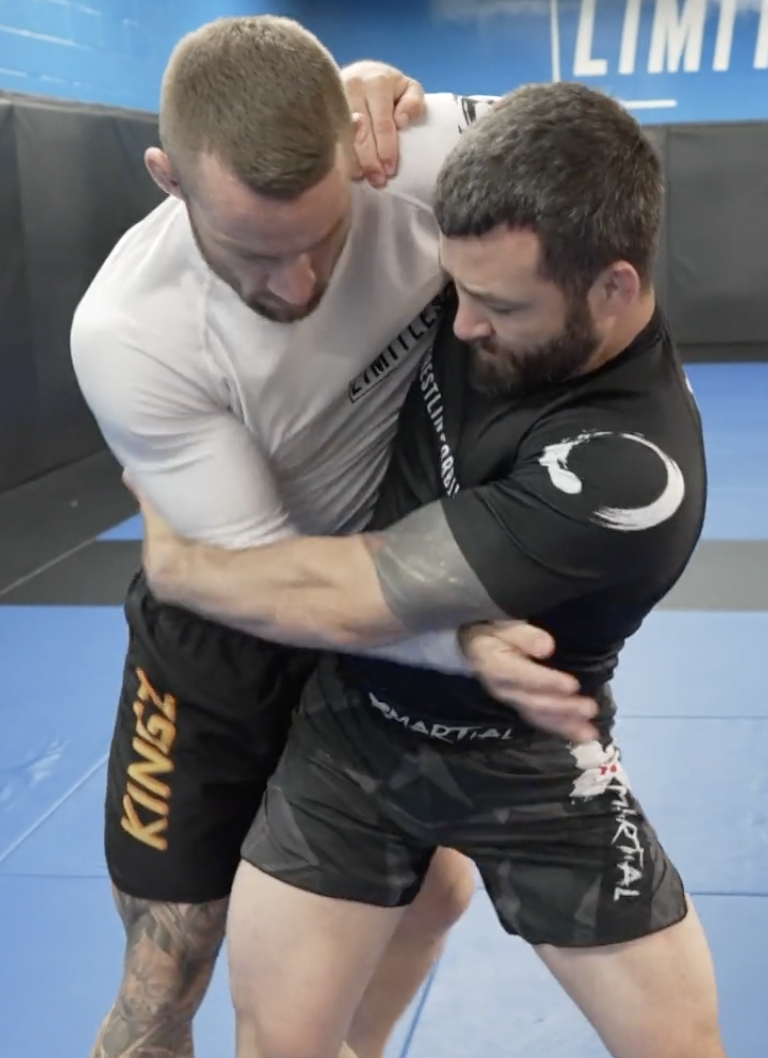
This "push-pull" is the backbone of getting your opponent out of position
Conceptual Overview: Posts
Layers of Defense
Layer 1: Feet Layer 2: Knees
Layer 1: Hands Layer 2: Elbows
The first is more defense (more options and a better Post) than the second. If you let someone build up they will have more defense.
You don't want your opponent's Layers of Defense on the mat or on you.
Stay off the waist
(with the exception of having Inside Thigh Position)
You don't want to give up a good Single or Double Leg and go to the waist if the opponent has inside thigh position.
If you're on the legs, it means their layers of defense are immobilized and off the ground.
Your priority should be to stay on the legs and finish the takedown. Letting go of the single for the side body lock, you give your opponent the space to defend.
Fight for Inside Thigh Position to block their throws.
They need Inside Thigh and Hip position to execute throws
You must always attack the Post to keep your opponent on the mat.
With Lower Body Takedowns, you attack the Post first and then look to control the torso With Upper Body Takedowns, you control the torso first and then look to attack the post
The same is true with passing (clear legs, control torso in either order)
You can attack their Posts to keep them from getting back up.
On The Mat
Stance
Keep your toes pointed forward like a sprinter. If you back leg is turned out, you don't have a lot of power. Shoulders over your toes (not behind, not in front) Elbows pointed in
Inside Control
To clear their arm, push against the bottom of their elbow rather than grabbing your wrist. This affords you more control over their posture; whereas if you are holding their wrist they can still move their head as defense.
Timestamp 5:00. Once you get inside control, if you're on his shoulders go thumbs in to push and once he "puts the break on" then you can pull him around.
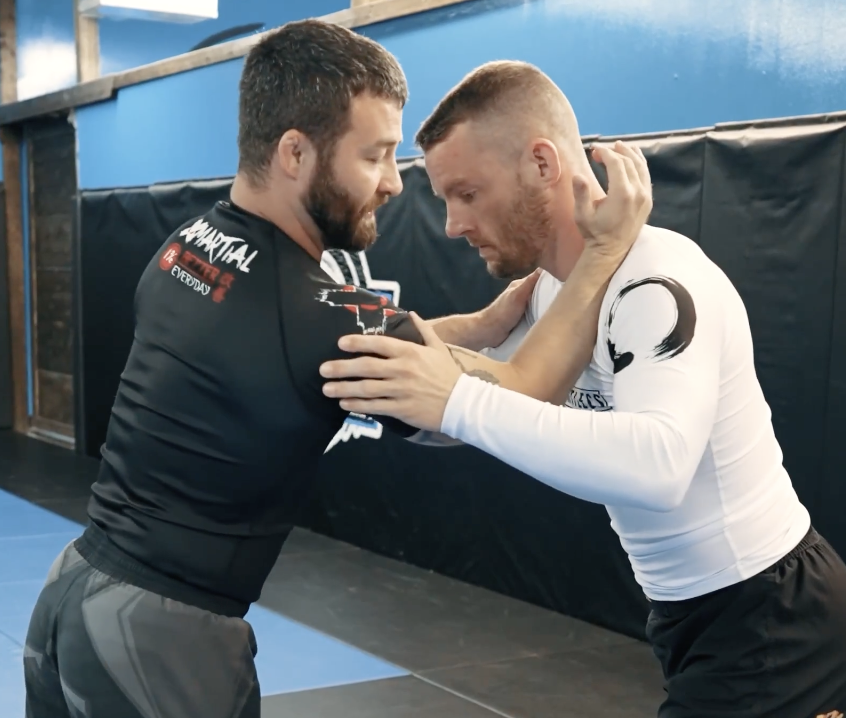
 Source - Ch. Inside Control; Time: 5:40
The one who has Inside Control, controls the push.
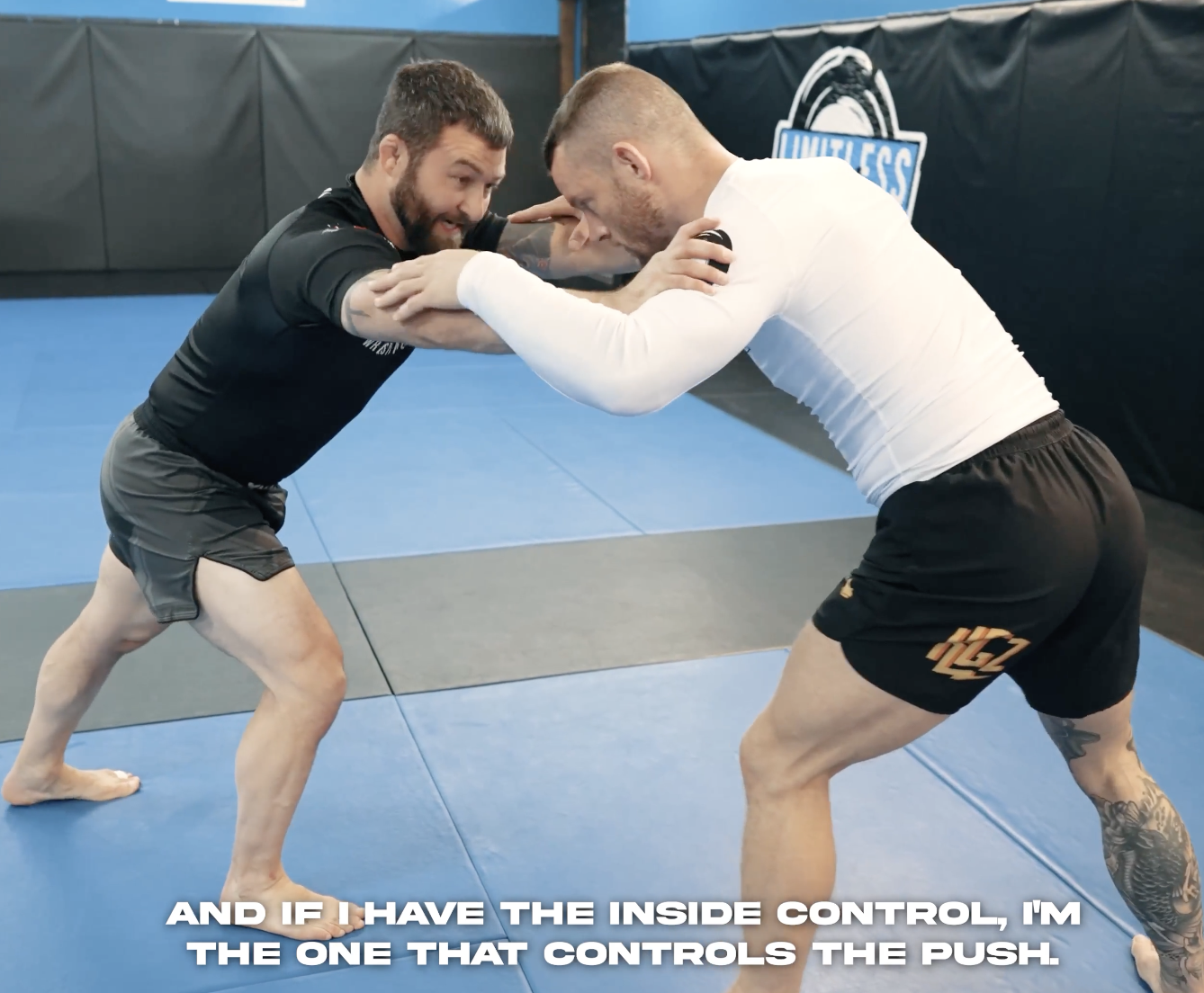
Get inside control, push, push, push; when he stops you: pullDrill
You can't just move someone with strength, it has to be "their idea" - then you add to it. When that "break" comes on, that's when his weight starts coming forward.
This is what "putting the breaks on" looks like. Almost everyone takes a bigger step backwards to stop the momentum of you pushing; that's your cue to Snap Down
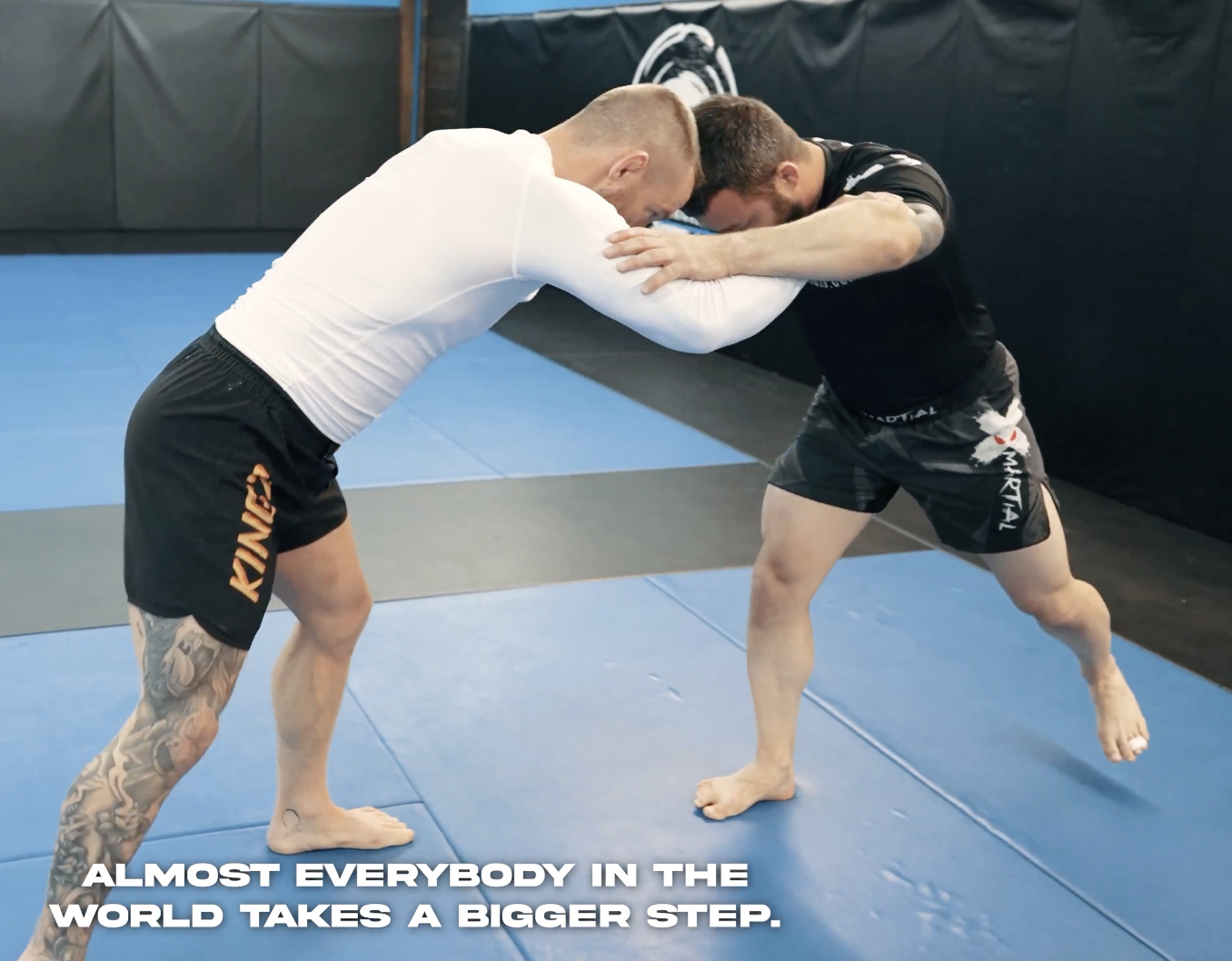
All my shots, all my snaps are coming off of that back foot cue
50/50 Positions
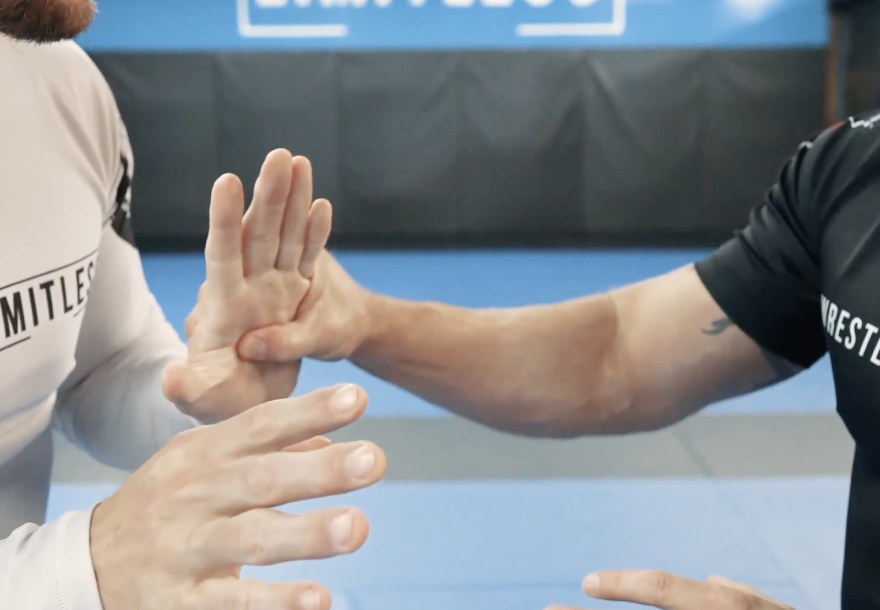
Poor hand fighting grips is when you both have the same grip. This goes for fingers interlaced grip too.
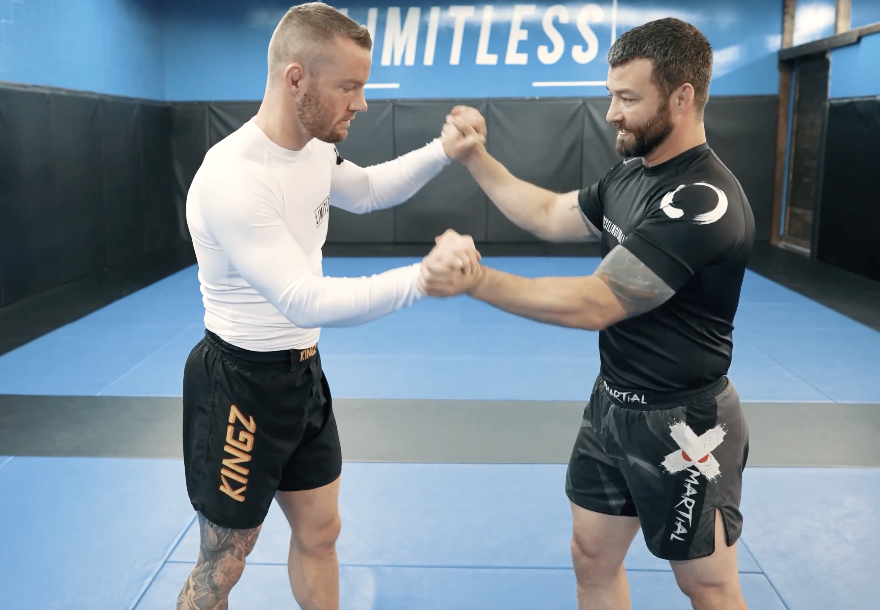 Superior hand fighting grip; because the only way for him to get the hand free when I push is to roll it and open up his Inside Position
Another 50/50 Position is double collar tie. You can't snap him cause you're snapping him right into you.
Avoid these positions
If you get caught in these positions, you need to get out.
Rotate your forehead into his head. Then you can circle away from the Collar Tie if you just want it off
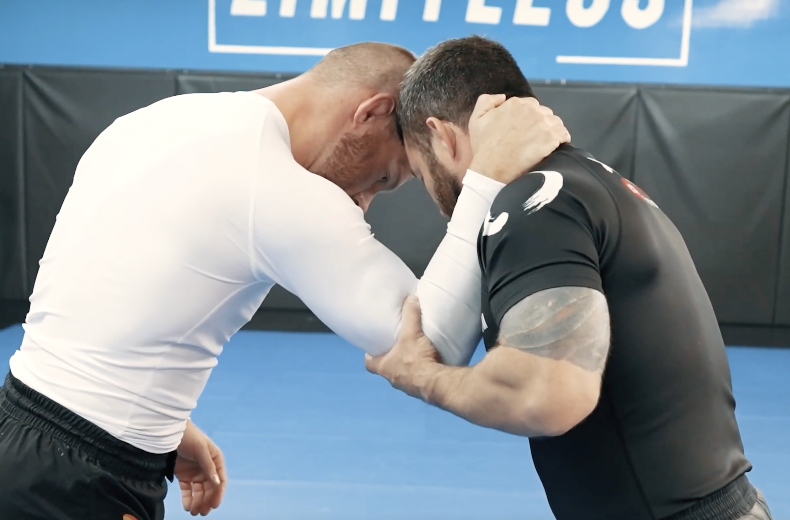
Bone grip: how to grab the elbow:
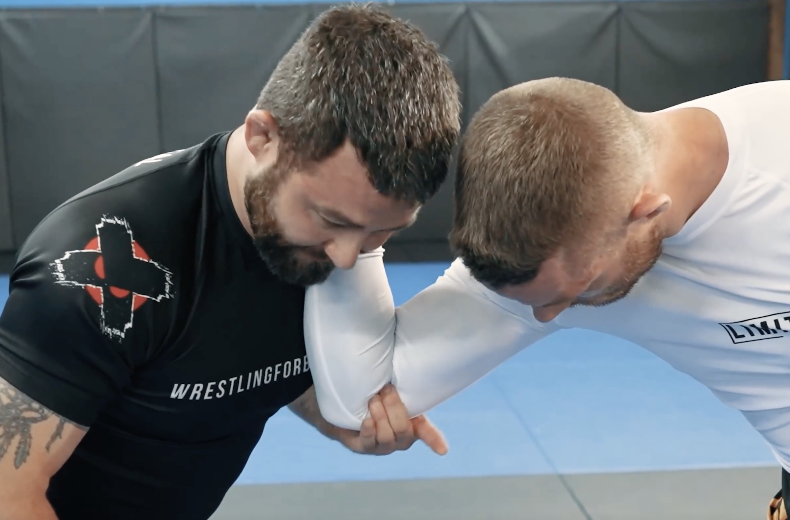
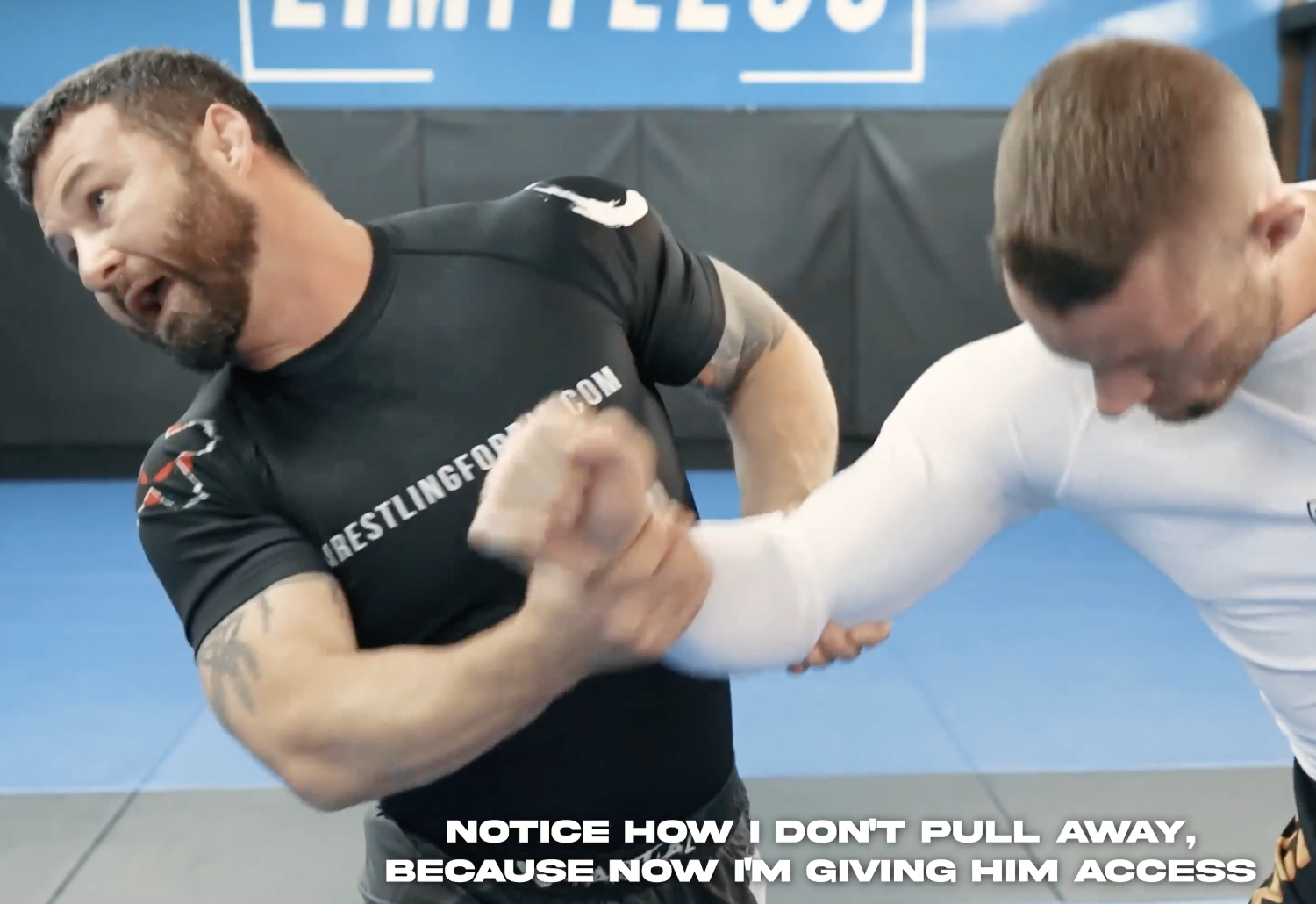
Rotate your shoulder into him but maintain your posture. Do NOT pull away (pictured below) because this compromises your stance.Breaking the Collar Tie Incorrectly
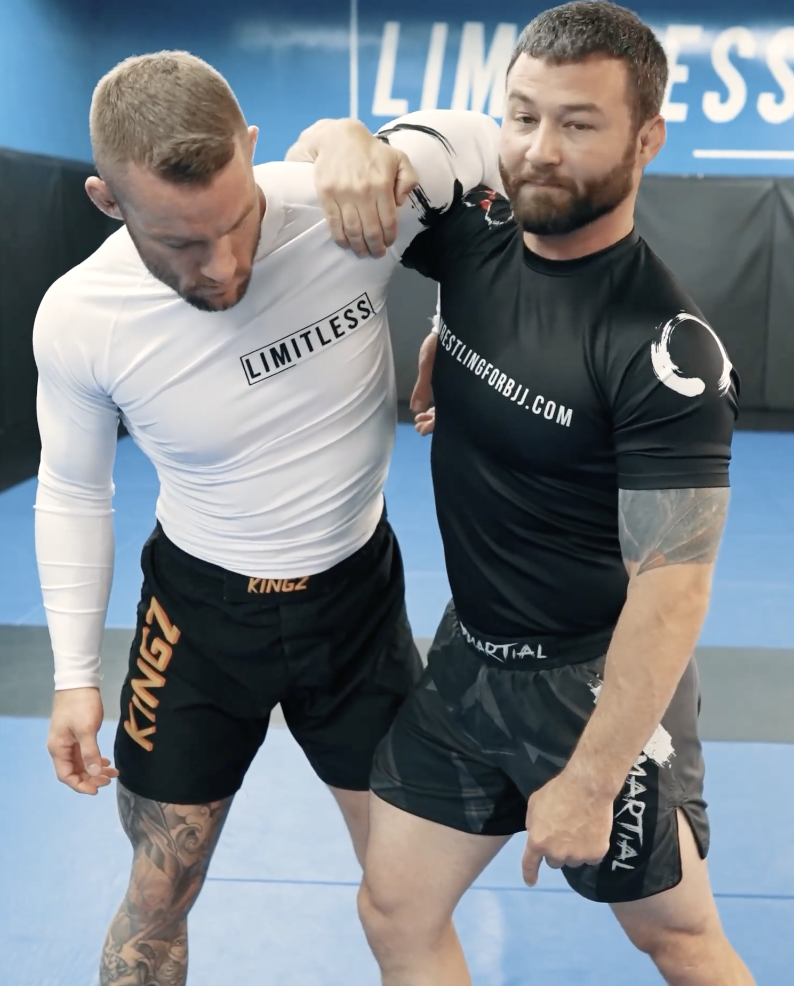
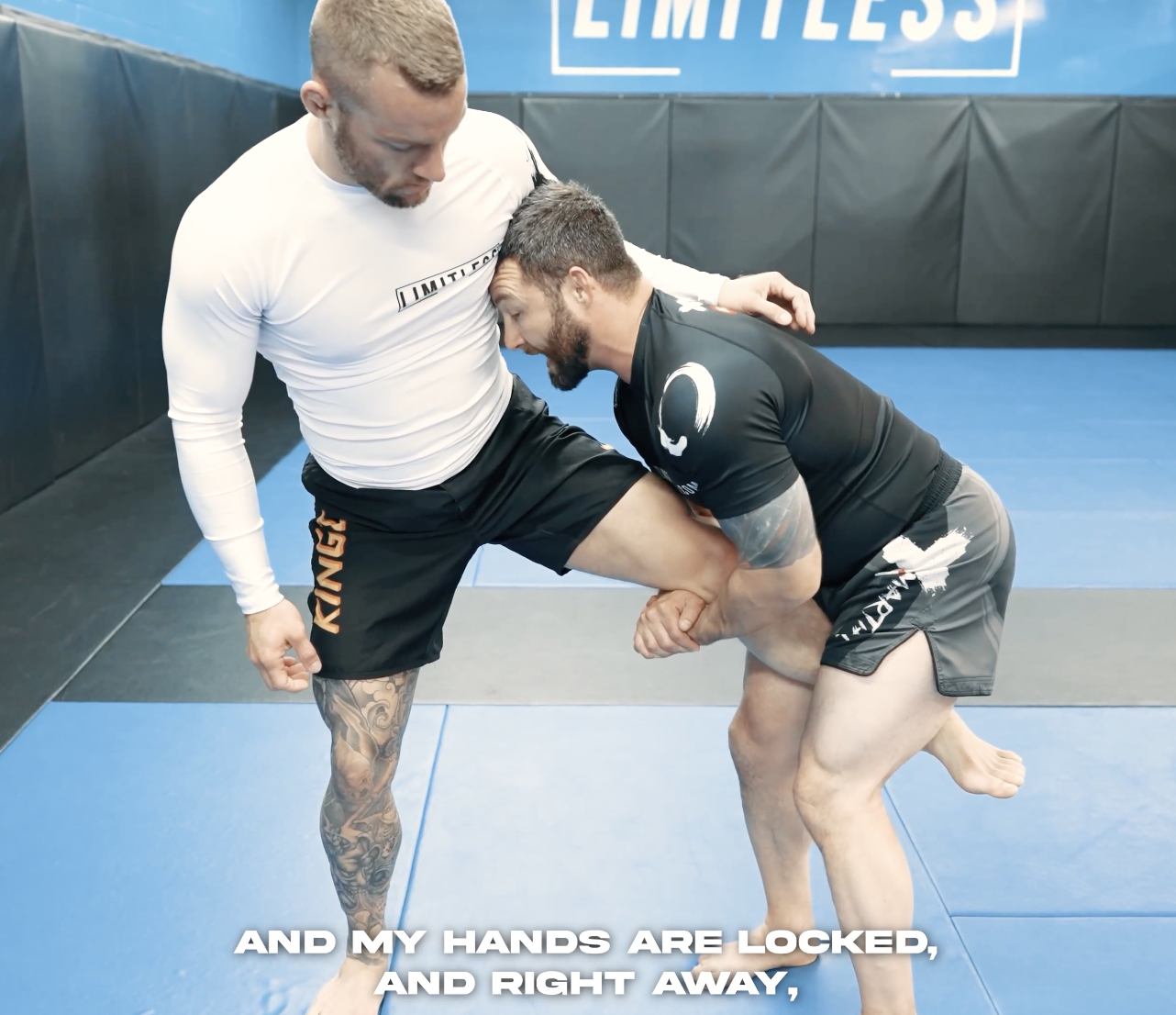
Very dominant position
- Strong underhook
- Inside Thigh Position
- Aligned stance
- Inside head position (not pictured)
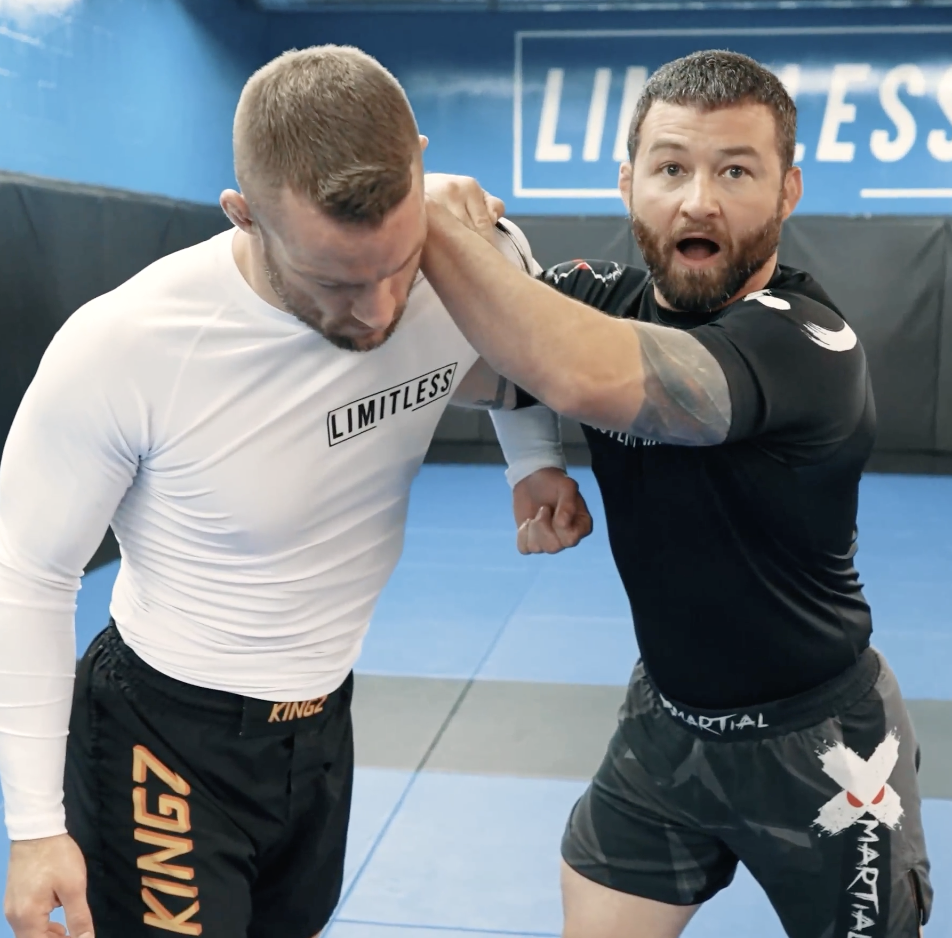
 You can use control on the back of the head to reinforce your underhook by pulling down.
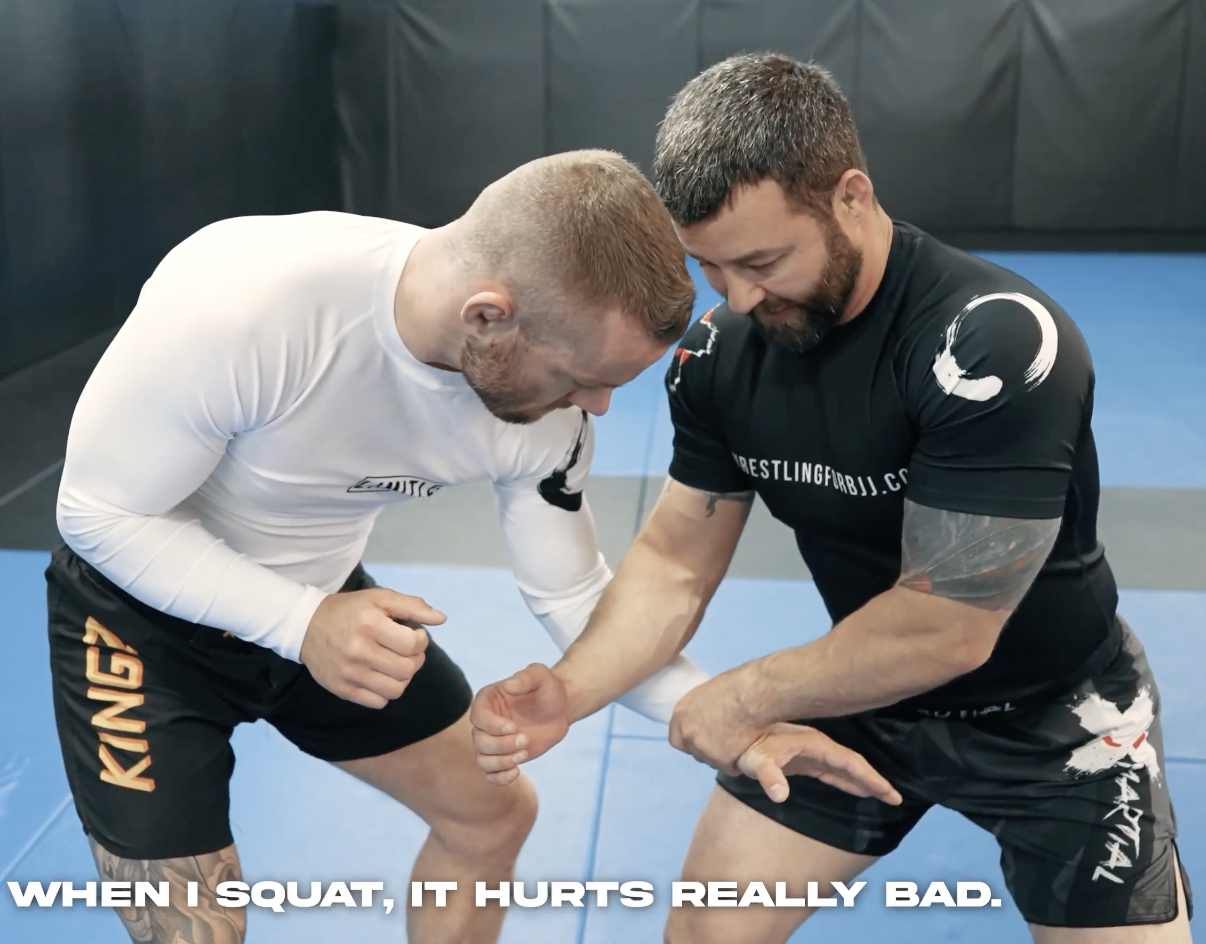
Technique for getting underhook:
- Cross grab
- Pull
- Place your free forearm on his forearm and squat
- Slide, keep the wrist and get the underhook (picture 2)
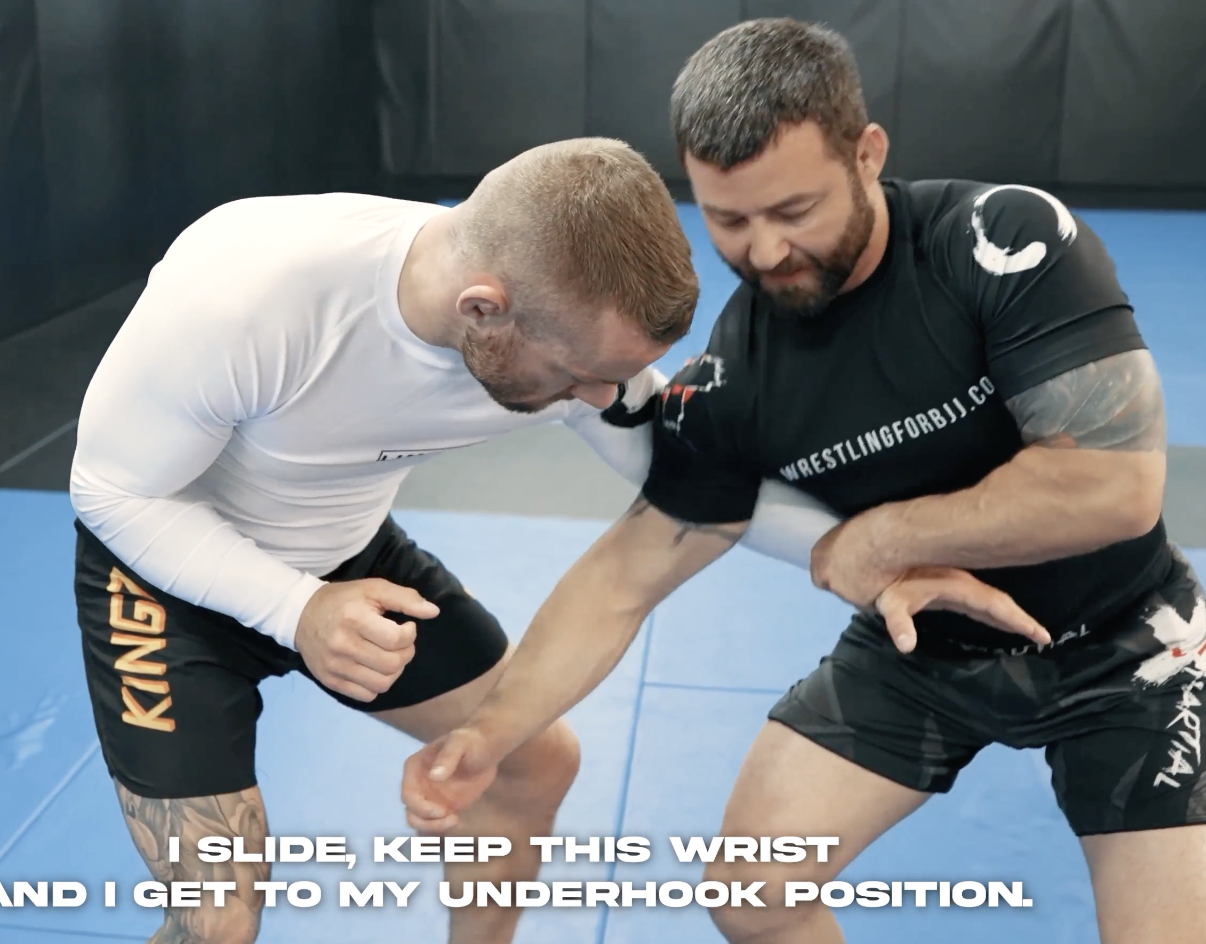
Single Leg
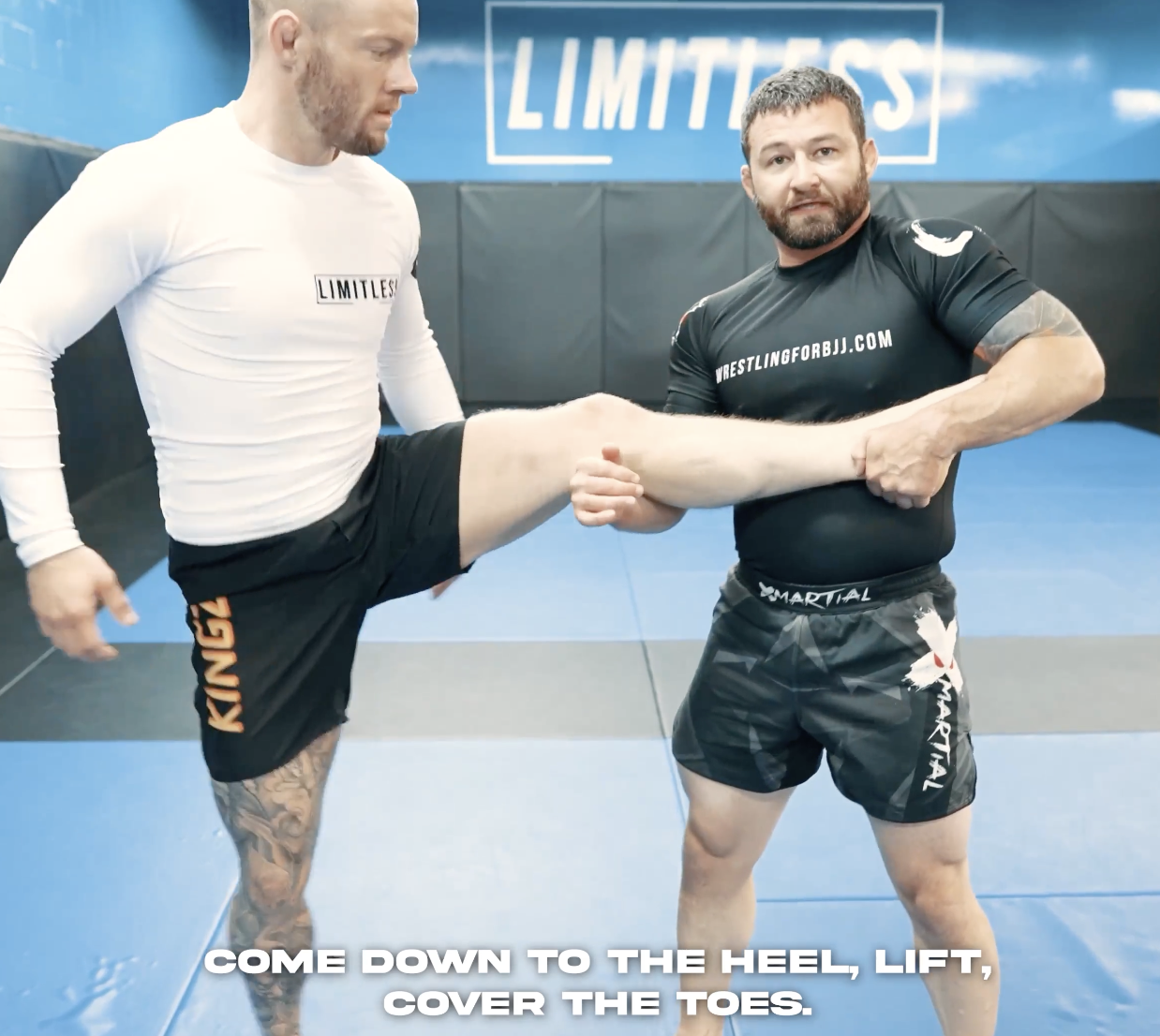
 Detail: If you pick the leg up, hold the heel and cover the toes so they can't just kick out:
 When you're going for the trip, don't "go to them" because you'll compromise your stance if you do. Instead, "bring them to you" by lifting his knee which forces his foot closer
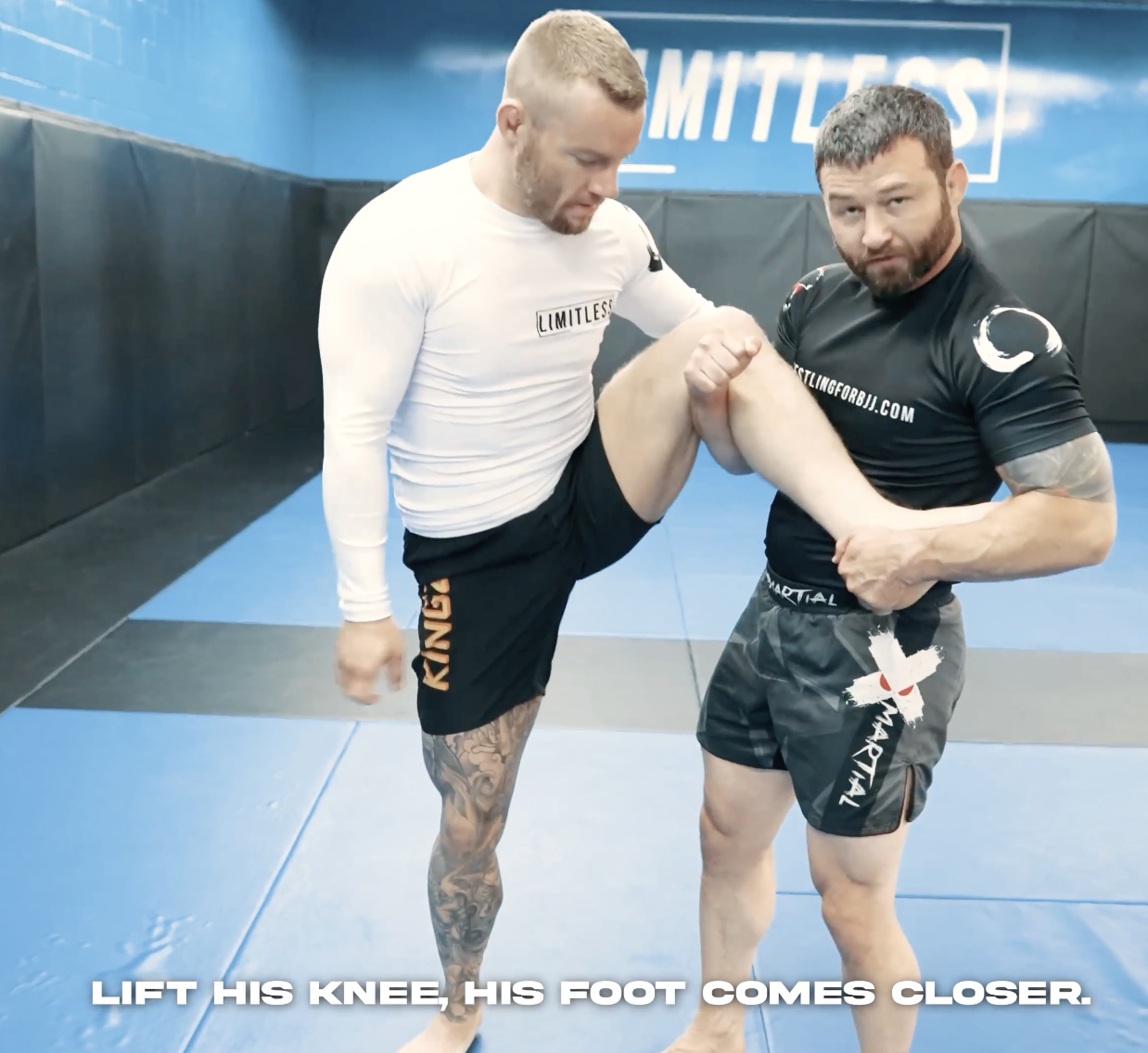 If they grab on to your collar for balance, you can grab their elbow over the top with your near hand and circle away to make them fall (timestamp 6:15). It's very similar to Running the Pipe but your holding onto their heel and elbow instead.
Sprawl Defense
Bone Grip
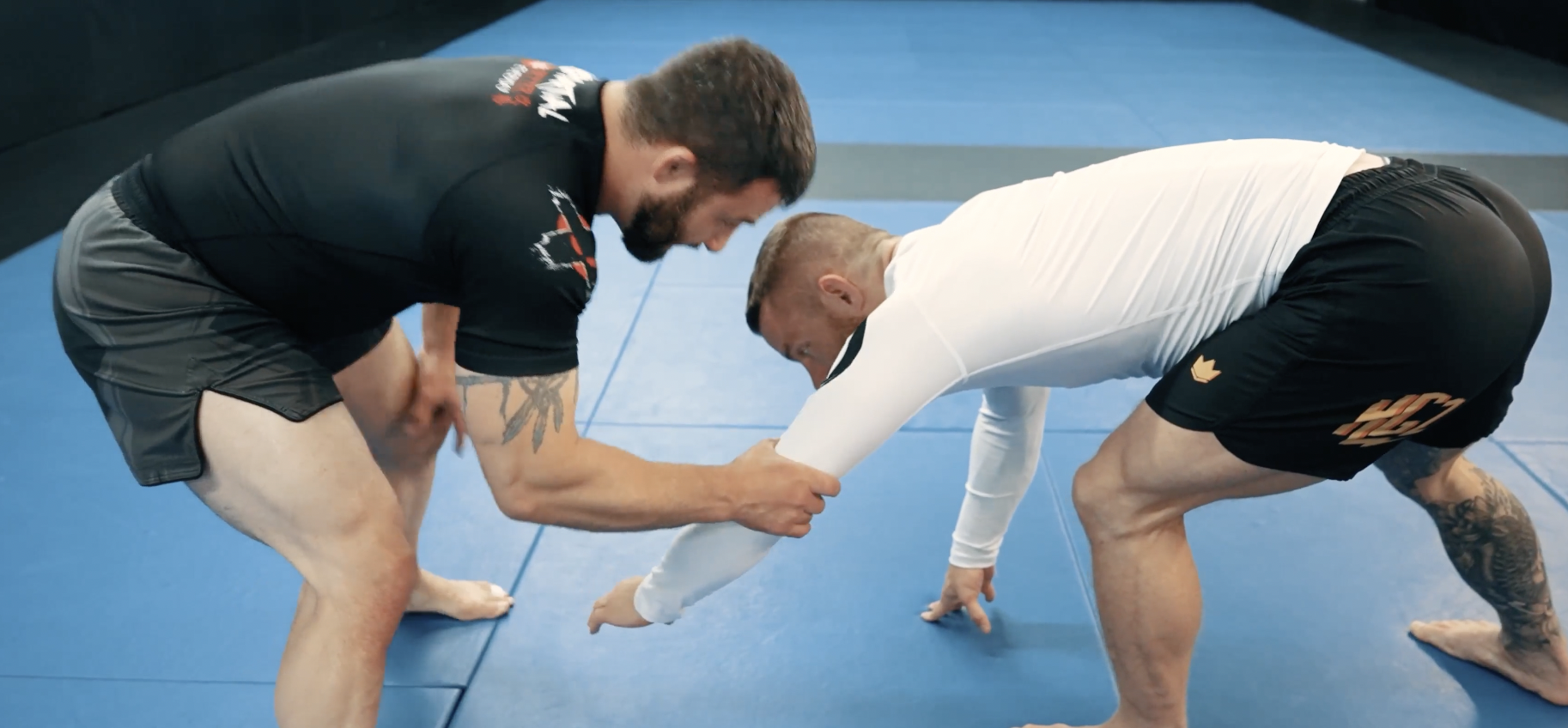 After you sprawl a shot, when they get up there's an opening to pass behind their shoulder
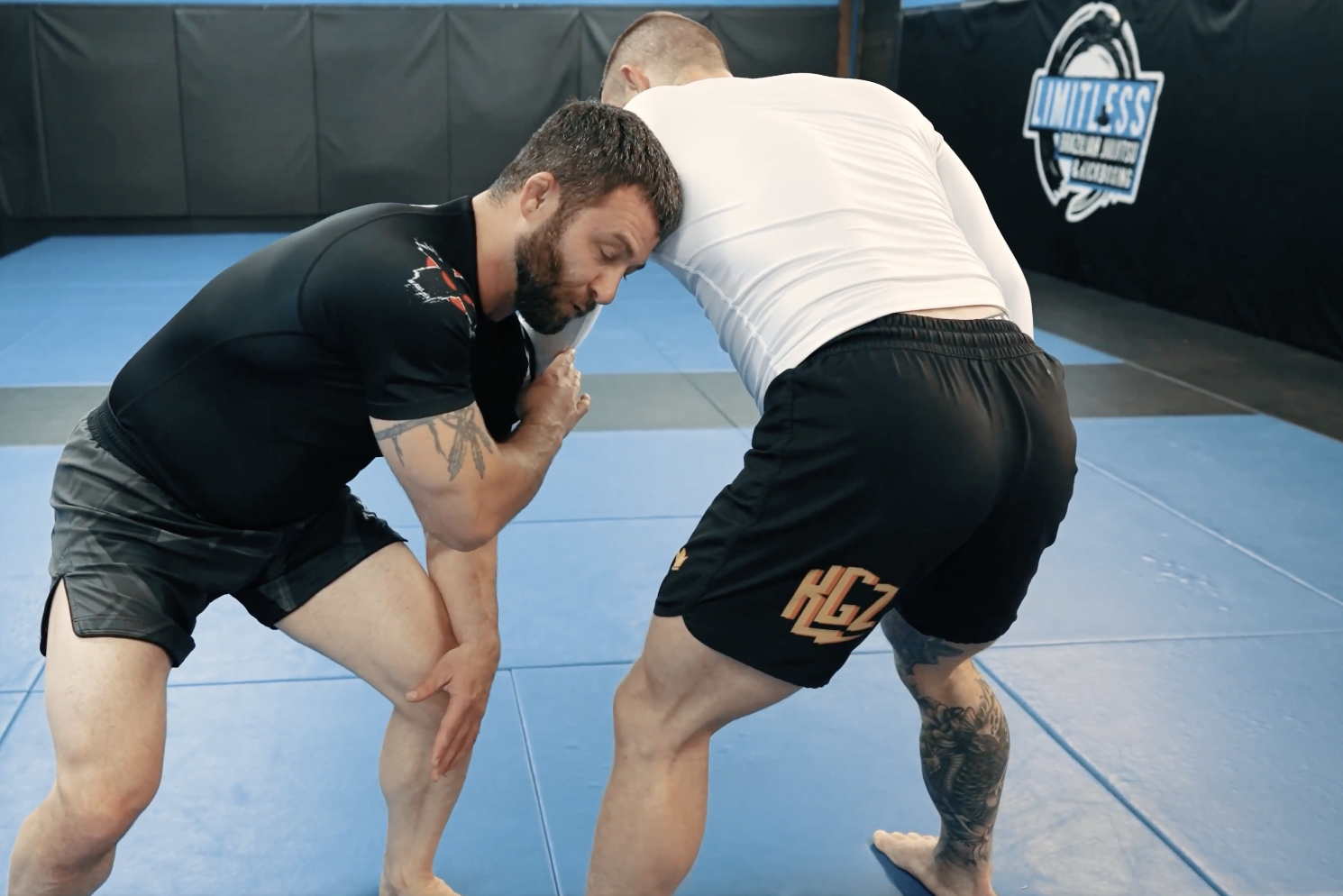 "When he comes up, I pass by and can walk and block that far leg"